Identity & Access
Partners and users allow the hierarchical organization and grouping of PayData Accounts. While child-partners are optional, the creation of users is required because all PayData accounts need to be assigned to a user.
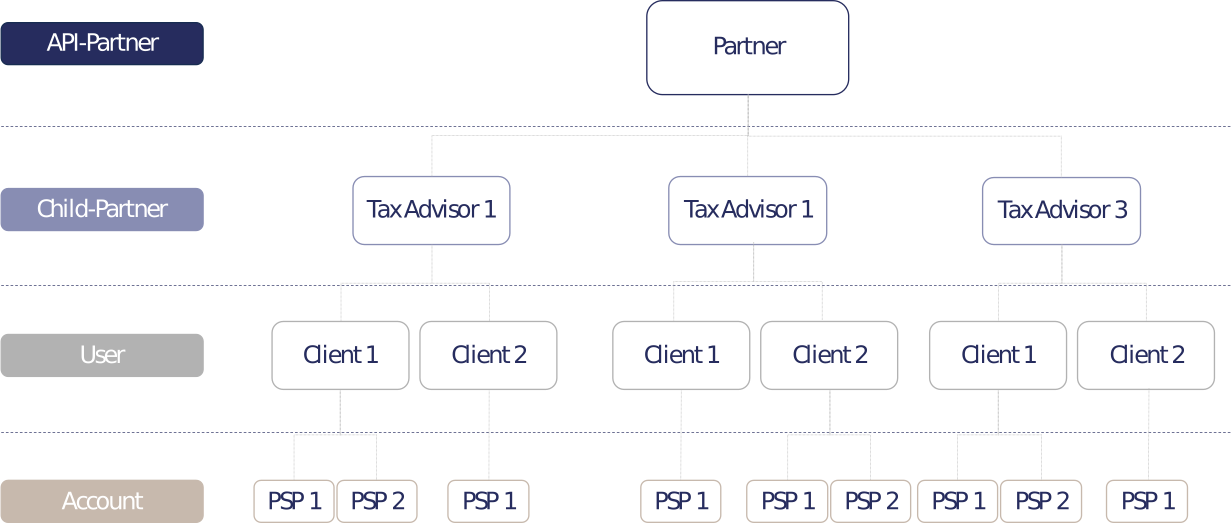
In the simplest case, the main partner has a single user that contains all accounts. But generally, a separate user should be created for each end user. Additionally, users can be grouped under child-partners if they belong to the same entity (like a tax advisor office).
The following diagram shows the use of child-partners to separate the users for each tax advisor office from each other.
PayData strongly advises against creating accounts belonging to different end users under the same PayData user, since support tools might display all accounts for a user. This can lead to human error and accidental data leaks.
This chapter covers Partners and Child-Partners, User Management, and Token Management, in that order. See Authentication for how to send your token and what the API returns if it's rejected.